Showing posts with label Organisation. Show all posts

Monday, 13 January 2014

Plans For 2014

I have finally finished the planning for 2014. As usual we have lots to keep us busy, many trips to go on and plenty of projects to undertake. Here are some of the things we hope to cover in 2014:

  • Numbers and number operations, place value and money
  • Fractions, decimals and percentages
  • Measuring
  • Shapes, angles, directions and coordinates
  • Patterns and probability
  • Spelling, grammar, writing
  • Handwriting and touch typing
  • Speaking, listening, presentations, and plays
  • Lots of reading
  • Earth sciences including weather, rocks, minerals and geology
  • Gardening, bush walking and nature study
  • Using computers to manipulate text, images and data
  • Drawing, painting, sculpture, textiles and collage
  • Appreciating art from ancient cultures and by Aboriginal Australians
  • DIY, working with materials and tools and designing products
  • Local Studies
  • Romans and Medieval times
  • Mapping and data collection
  • Festivals in Australia and around the World
  • Piano, music reading and composition, music appreciation and dance
  • Swimming, gymnastics and team sports
  • Cooking and chores
  • Camping, day trips visiting museums and galleries

Phew! I wonder if we will achieve this huge list? We have settled into a routine of working 3 mornings a week on the "core" subjects of maths, English, music and computing. We have an afternoon each a week for art, swimming, library and gymnastics. We also go to 2 home education social groups each week. We have been trying to cover the sciences, history and geography in "project weeks". This has seemed to work well and we stay enthused as the topic doesn't drag on for weeks. 

In term one we have a cross curricular topic on local studies planned. We will be doing lots of history, geography, computing, English and technology whilst we investigate our local area. For science we will be looking at weather and doing lots of experiments. We will be visiting some exhibitions this term which feature ancient treasures and we will be creating our own ancient treasure filled chest in art. We have 3 camps planned and also a trip to Canberra and to Sydney to see the musical Lion King. Hopefully we will still have time for some trips to the Powerhouse and Australian museums too. 

Check back soon to see what we actually achieve!


Wednesday, 6 November 2013

2700km - So What?

If you've been reading lately you'll have seen that we have been travelling across New South Wales and Victoria on a camping trip. So we've been having a holiday, not doing any school work or anything educational right?

Well yes.....

....and no!

All though the trip was primarily a holiday break there was plenty of learning going on too. Most home-educators consider that children are learning all the time not just when we are actively engaging them in a "lesson" or other activity. Many home-educators trust this "natural learning" completely and do no formal instruction at all (otherwise known as autonomous education).

We have covered so many subjects and learnt so much during the holiday and it has not felt like work at all. The children have learnt loads about nature, science, geology and physical geography just by exploring the landscape of the national parks. We've covered history by visiting historic sites, monuments, museums and buildings and travelling around Melbourne on the tram. We learnt about science and astronomy at the Scienceworks museum and natural history and Aboriginal culture at the Melbourne museum.

Just walking together through the bush has given us time for lots of amazing discussions including the role of government, palaeontology, the world wars, ecology, weathering, Aboriginal culture, and lots of other things that I have already forgotten.

During the long drives on the motorway the children read loads and loads of library books; some works of fiction, others historical novels or factual books.

So yes, we did have a holiday, but the children (and adults!) were still learning all the time.

Have a look at the essential reading tab above for more about how children learn autonomously.

Sunday, 21 July 2013

Term 3 Planning

It's that time again to plan the next few weeks work.

As I got a little carried away for term 2 (and we had lots and lots of organised excursions especially in May) we still have projects that are not completed which means less planning for me!

In term 3 we will continue working on our astronomy, maps and family tree projects. For English we will be working on library skills, recounts, opinions, poetry and speaking to an audience. In art I hope to get the children working to build up their sketch books and turn their observational drawings into designs for art works.

We'll be visiting some other parts of NSW along with trips to the Powerhouse space gallery, Wildlife Photographer of the Year at the Australian museum, the Science Centre and Planetarium, Sydney Moderns at the Art Gallery of NSW and Operation Art at the Armoury Gallery. We'll be rock climbing, hiking and geocaching and probably lots of other things I don't even know about yet!

Monday, 15 April 2013

Term 2 2013 Planning

Well it's that time again; planning for the next 10 weeks of home-education. This coming term we have lots of great excursions put on for us by Home Education Penrith. This May sees the 200th anniversary of the first European crossing of the Blue Mountains. We will be attending lots of events and workshops based around this theme. Here's an outline of what we hope to achieve (or at least start!) in the coming term.


  • Continue on with our Targeting Maths, Maths-on-line, fractions, tables and maths lessons
  • Continue on with Jolly Grammar, spelling, assigned reading and reading aloud.
  • Work on writing our own stories and making our own story books.
  • Intellego Astronomy unit study, science experiments, museum and observatory visits.
  • Intellego Maps unit study
  • Portrait making and visiting the Archibald prize exhibition. 
  • History project 200th anniversary of the Blue Mountains crossing
  • Family history and family tree
  • Library skills project
  • Google global puzzle challenge
  • Computing
  • Gardening and nature study
  • Cooking
  • Chores
  • Swimming, gymnastics
  • Piano
  • Touch typing
  • Presentations


I think I'm being quite ambitious with all the projects this term, especially as we have so many days out on excursions. But we'll give it a try and see how it goes, and if it doesn't get done - well that saves me planning next term. Make sure you keep checking up on us!

Sunday, 6 January 2013

Project Tables

Today I have been rearranging the learning space to add in some project tables.

I have one area where I have set up books associated with our current topic of fossils. We seem to have quite a few. This will form the basis of the assigned reading for the next few weeks. As we move onto a different unit study I will change the display.

Book resources area

I also have a fossil collection ready on my discovery table for the children to find tomorrow. I made lots of question cards to stimulate hands-on learning. Again I will change the objects and the question cards as we change topics.


Discovery table

One of my objectives for this year is for the children to write independently for pleasure. With this in mind I set up our new writing chest. Inside are lots of different pens and pencils, plain and lined papers, index cards, postcards (get free ones at tourist attractions), envelopes, post-it notes, forms and writing frames. There are some great resources to download free at sparklebox. The children played with it for ages today. There were lots of love letters written to Dad and I which got posted in the postbox. The writing frames were also popular.


By R

By R

By L - yes she did ask me how to spell champagne

By L

I have also allocated a place for some of our project books and "How to" guides. I will add things like the electronics kit and other "make it" kits to this area. I hope that the children will chose their own projects to work on from the ideas in these books.


Saturday, 5 January 2013

Planning 2013

I have just about completed my planning for 2013. First I came up with learning objectives for each subject area; by this I mean what I want each child to learn over the year. I used the NSW and new Australian Curriculum for ideas but I did not stick rigidly to them or to the age groups. Some of the objectives in the government curriculum are dumbed down beyond belief. I also used the UK National Curriculum for more ideas, along with adding in extra personal objectives of my own. We have objectives for the following subjects:

  • Maths
  • English
  • Science
  • Computing
  • Geography
  • History
  • Art
  • Sport
  • Music
  • Design and Technology
  • Life Skills
  • Religious and Cultural
  • Projects and autonomous work

Once I had my objectives I had to decide how I'm going to achieve them. I will be "teaching" the children in 5 different ways:

  • Using structured formal curriculum
  • Unit studies
  • Cross curricular
  • Real life experiences/autonomous
  • Visits and trips

Some subjects lend themselves more readily to a particular way of teaching and learning. Maths, English and computing in particular have many cross curricular links. During the mornings I plan to work in a structured way on maths, English, computing, and music. The other subjects will be taught in the afternoons using unit studies and real life experiences. As usual we have many trips planned.

In terms of subject matter this year here's what we are going to cover:

  • Counting, tables, number bonds, calculations, Roman numerals, money
  • Fractions, percentages, decimals
  • Time
  • Measuring and converting between units of measurement
  • Shapes, angles, symmetry and tessellation.
  • Data recording, graphs, averages
  • Chance
  • Reading and using texts
  • Spelling, grammar, handwriting, writing, poetry
  • Talking to an audience
  • Weather, Earth science, space, nature study
  • Touch typing, databases, image manipulation, using the internet, 
  • Maps, globes, local and world geography
  • Family history
  • Ancient china, Rome, Medieval times
  • Drawing skills, sketch books, experimental art
  • Artist study
  • Swimming, gymnastics, basketball, dance
  • Piano, music reading, composing, listening to music
  • DIY and gardening
  • Cooking and chores
  • Health and safety
  • Celebrations within the Australian and world community

You can take a look at some of our curriculum resources below:

Friday, 9 November 2012

Project Time

This week we began working on projects. The children are free to choose what they would like to study. First we brainstormed ways in which we could study a subject. We came up with reading about it, drawing, writing, using the internet, making models, asking questions and loads of other ideas. We also talked about what wasn't working on a project and came up with a much smaller list including playing random Playstation games and watching cartoons.

This week L chose to find out about wild animals. She looked through some books and watched a few YouTube clips. She then decided to paint what she had seen.


R was interested in finding out how to play chess.  He used the internet to find out how to set up the board and then we had a few games.  He watched some YouTube clips to get some tips on playing and then played against the computer.


Friday, 7 September 2012

Registration

We had our registration meeting today with Alison from the NSW board of studies. Thankfully the children were behaving as she arrived. She took a look at the learning space and at my planning and I showed her some of the children's work. She was very pleased with what we are doing and even wrote awesome on her form! She will be recommending to the board that we have a 2 year certificate of registration to home school before her next visit in 2014 when L will be registered too.

I have to say I'm glad to see the back of the visit, and happy to have some good feedback. Another reason I'm glad it's over is that R was worried that she would send him to school and was a bit distressed yesterday.

So now we can get on with our adventures and a big one is about to begin. Watch this space.

Sunday, 15 July 2012

Term 3 Begins

The schools go back tomorrow for term 3 - thank goodness we won't have to put up with school kids crowding everywhere for a while. We have already been doing home-school for a week - our machines project you can read about below. Tomorrow we will get back into regular activities. Here are some of the things we will be covering this term:

  • Tables, counting, calculations
  • Money, measuring, time, 
  • Fractions
  • Shapes, angles, symmetry, coordinates
  • Spelling, phonics, sight words, grammar
  • Reading
  • Poetry and report writing
  • Human body, senses, organs, skeleton
  • Nature study
  • Gardening
  • The human form in art
  • Painting, drawing, printing, sculpture, collage
  • The ancient Greeks
  • The Olympics ancient and modern
  • Places in Australia
  • Computing - word, excel, power-point, internet
  • Ball and movement skills
  • Basketball, swimming
  • Piano, music appreciation
  • Cooking
We also have our regular weekly home education hangout and workshops. Perhaps the highlight this term will be our home-school camp with our friends to Dubbo; it's famous zoo, jail and flying doctor service. 

Keep an eye on the blog and make sure we really get all this done!

Saturday, 23 June 2012

Term In Review

The term is coming to an end and before I begin planning the next one I thought I'd look back over our successes and failures for this term.


Ten out of ten

Firstly we've had some fantastic group learning experiences; aboriginal camp, art, basketball, music, museums and roller skating to name a few. This coming term we have a road trip and camp at Dubbo to look forward to and lots more besides.

Assigned reading of topic books has worked really well and I have found it is a fantastic way to keep the kids quite in the car! The library books actually get read and R gets a wider perspective on topics by reading from a variety of authors.

Phonics and tricky words with Jolly Phonics has worked it's magic with L who is now confidently reading Oxford Reading Tree books for year 1 children.

We have purchased the Maths-On-Line curriculum (home school discount), which seems to be more in-depth and challenging than StudyLadder. The children really like it.

We are still following the Mr Q life sciences curriculum and we have made this more comprehensive with nature study, trips and extra experiments.

We are still enjoying using The Story Of The World history curriculum. We've made some great models, recipes and art works and performed some cool experiments from the accompanying activity guide.

The children have cooked every week and, whilst not always healthy, at least they have made something.

The children have made excellent progress in swimming, R now swims about 10 lengths of the 25m pool and is learning breaststroke whilst L can swim the whole of the training pool and is getting the hang of breathing to the side.

Must try harder


One of the major issues we have is that we are doing so much there isn't time to slot in extra activities or random projects that the children request. So next term I plan to do 4 weeks "core" curriculum, just like we have been doing, followed by a week of project. Then another 4 weeks core and a weeks project. I plan to base the projects weeks around whatever the children are interested in at that moment. Currently it's taking apart the car to see how it works. Eek!

Our artworks this term have mainly been done as part of other topics and we have not completed much in the way of directed art and experimental art, I hope to remedy this next term when we will concentrate on the human form in art.

Whilst R has worked through lots of spelling and grammar activities we still have not done a great deal in the way of writing. Poems and stories here we come!

The kids have made excellent progress in music lessons but we have not actually listened to many different types of music. Another idea for the car next term.

Whether any of this will actually happen, who knows? Check back soon to see...

Saturday, 7 January 2012

Are There 7 Days In A Week?

Are there 7 days in a week? We no, not in this household! With Dad doing shift work, 3 days on and 3 off, our weeks are 6 days long. In the past, with a 4 on 4 off shift our week has been 8 days long. Never in recent memory has our week been 7 days.

That's how we like it. We couldn't imaging a life with only 2 days off. Only being able to go places on weekends when its crowded. No thanks!

However the majority of  the rest of the population have a 7 day week. That's where the problems start. For us a "weekly" routine lasting 6 days would be perfect. However swimming lessons, music lessons, hangouts and more all run to a 7 day week. No matter how hard you try (and believe me I've tried) its impossible to combine these 2 routines perfectly. No wonder we never know what day it is!

So here's the thing. I've planned all I want to cover in this years home education, but I'm still searching for a routine that works and gets everything done. We've been working on "school" for 4 days of the week (this includes weekly external classes), with 1 day for hangouts, 1 for trips and 1 free to do whatever we like. However I feel that there is a bit too much to cram into those 4 days. 5 days would be better but the that's 83% of our 6 day "week" taken up with "school". Too much.

So what's the solution? I don't know but I'm working on it...watch this space.

Monday, 5 December 2011

2012 Planning

I have spent the last week writing up my planning for 2012. We will be inspected this year as R turns "school age", so I want to have everything in place. Along with the obvious maths and English we will be focusing on ancient history and geography, biological science, artist study, computing, nature study, life skills, reading and narration.

Here's a sneak peek at some of the things I have in store for term one:

  • Counting, number bonds, addition, subtraction, tables, properties of numbers, money and real life maths problems.
  • Lots of reading, narration, handwriting, phonics, grammar, writing reports, stories and poems. 
  • Living things, habitats, biomes, species and offspring, plant structure, growing plants, Australian animals and tree study.
  • Picasso artist study, experimenting with art materials and techniques, painting, collage, clay work, landscape, felting, and simple perspective. 
  • Archaeology, making and burying a time capsule, hieroglyphic writing, mummifying a chicken, making monsters, and story telling.
  • Touch typing, mouse skills, word processing, digital photography and image manipulation. 
  • Swimming and music lessons.
  • Cooking.
  • Gardening.
  • Excursions.
  • Home Education group hangouts and survival skills.

Check back often to see how it all turns out.

Saturday, 1 October 2011

Home Education Styles

I've been thinking recently about the different styles of home education and which one, or combination, is right for our family. Some home education methods include:

  • Traditional/school like/curriculum in a box
  • Autonomous/natural learning/unschooling
  • Unit studies
  • Charlotte Mason
  • Steiner
  • Montessori
  • Classical
  • Computer based
  • Eclectic

You can read up more on any of these styles on the Internet, or download a summary here

I have just read some of this book:


I have also been reading up about the Charlotte Mason Method. These two methods have a lot in common. They both rely heavily on quality literature, not text books but real, living books. R in particular loves reading and learns masses from reading books either with an adult or to himself. I want to include even more reading into our home education. Both methods advocate the use of narration - having the child repeat back what they have learnt from reading. This can take the form of an oral narration, written work or other physical recording. See some narration suggestions here. Although we discuss what we have read I have not tried narration before. I hope to try out the method in the near future. My only reservation is that it may make reading tedious and if this happens I will not continue with it.

One aspect of the Charlotte Mason method that I do not like, is the assumption that children will learn to write and spell just by reading literature. We currently use more traditional methods for reading and writing such as the Jolly Grammar program, and I plan to continue with this.

When it comes to maths we use traditional, computer and hands on methods. I also find that lots of maths is picked up in an autonomous way through everyday activities and conversations. R is interested in large numbers and infinity.

Science in classical education is mainly learnt from books. Whilst this has its place I think science should be more practical. Charlotte Mason education teaches about natural science through nature walks and the keeping of a nature journal. This is something we have done in the past and I would like to implement it again soon. However Charlotte Mason education does not adequately cover the other sciences such as physics and chemistry. Classical education promotes the teaching of the concrete everyday biological sciences in the younger years, followed by chemistry and lastly the most abstract science; physics. This seems like a sensible idea to me. Currently we teach science using a topic approach. This is similar to the unit study method but differs in one important way; the connections within the topic are natural and relevant, we do not try to connect every subject to the topic in what can turn out to be arbitrary ways. Science is also easy for the children to pick up in an autonomous way through conversations, observations and play.

The classical and Charlotte Mason methods also seem weak on the arts. The classical method even suggests that arts be left till the later years, if there is time for them. I think this is wrong. We tend to incorporate arts into other topics, especially into culture. However we have been doing some specific traditional art activities from the Drawing With Children book. The Charlotte Mason method does however incorporate the study of artists and composers. We have completed an artist study in the past and I would like to try this again soon. The children also listen to a variety of music and attend music lessons.

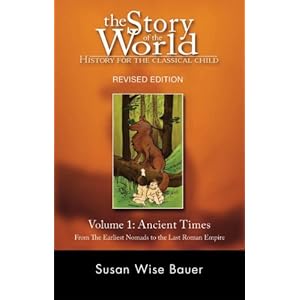
We have not covered a great deal of history yet, probably because I have very little knowledge in this area. I recently purchased this book, also by Susan Wise Bauer:


I plan to use this resource, its companion activity book and others in the series to cover history (and some geography) using the classical/Charlotte Mason method. The book is great reading, aimed at children but not dumbed down in any way. The activities book suggests lots of ways to add hands on lessons. Check back soon to see how we go!

We tend to cover geography culture and computing, as topics interwoven with other subjects (unit studies method), but I would like to bring more reading and narration into this area too.

The one thing that none of the home education methods seems to mention is sports and fitness. Currently we cover this with swimming lessons, outside play and informal team games with friends.

So currently we are using an eclectic method, with lots of book based learning and mini topics. How does it work for you?

Friday, 30 September 2011

One Crazy Term

Its the "school holidays" and I'm NOT planning next terms work. In fact we have got a large amount of this term's work done in the quieter holiday period. We have plenty planned that we have still not gotten to. I was aware this would happen as I had planned lots of activities for our architecture project, more than enough for 1 term. What with moving house we have got a bit behind, which I also expected. The upside? Not much planning to do for term 4, just carry on with what we have.

We also have another crazy term coming up when we will be away in the mountains for a few days, travelling to the UK for a wedding and attending our home-school camp. Add to that several trips, swimming and music lessons and we are hardly going to be in!

Keep your eye on the blog to see how we all cope.

Saturday, 3 September 2011

Pinterest

I have just discovered the website pinterest.com. This is a great website if you remember things visually like I do.

You know how it goes, you see a great idea on a website and bookmark it. 6 months later you want to look at it again but you cant remember what it was called and then spend hours looking through your bookmarks. With this site you make a visual bookmark using images from the page you are bookmarking. So with a quick glance you can find what you're after, click the picture and you're on the page you need.

Looking back through your pins (picture bookmarks) you can get re-inspired remembering all those great ideas you were going to use but forgot about.

The website also allows you to share your pin-boards (visual bookmark collections), and to browse those of others.

To view mine click on the Follow Me on Pinterest button here or on the side bar.

Moving Home

I've been rather quite lately due to us moving home. We have finally bought a place in Australia. Despite the exchange rate on the pound being totally rubbish we couldn't miss out on our new huge place.

We have done very little "school" work the last couple of weeks as we have been packing, moving, unpacking and rearranging. I have finally got the children's rooms sorted out. The rest of the house is a "work in progress"!

We have so much space now we really have a place to do everything.

The small playroom. With "small world" and "construction" toys

One end of the large playroom with our "art & messy" area, music centre, work tables and resources storage.

Other end of the large playroom with role play area

We have used the upstairs lounge as a library and quiet "chill out zone". We have the CD player for audio books and we hope to get a small sofa or other seating soon. R has spent lots of time here already.

The garden still to be sorted out

Friday, 15 July 2011

Planning For Term Three

Well I have spent several hours planning our activities for term 3. Last term we had a Geography focus so this term we are going to focus on History and Science. Our project is going to be architecture.

Firstly we are going to find out about properties of materials and test them practically in lots of different ways. Then we will build the house of  "the old woman who lives in a shoe", making sure we chose appropriate materials. Then its the turn of the 3 little pigs. We are going to build their 3 houses and then blow them down, which one will survive intact?

We are going to find out about how buildings are made, and luckily the house opposite us is being built right now so we have an example right here.  We will work on shapes, their properties and how they are used in buildings and other structures. We will make some buildings and bridges and test their strength.

We will research and find out about buildings from history, from other countries and we will investigate famous buildings. We are going to make models and art works and a time line street.

As we ourselves will be moving house soon the children will have a go at some garden design and interior design.

As well as our project we will be working on

  • counting
  • number bonds
  • tables
  • vocabulary of time
  • shapes
  • phonics
  • tricky words
  • reading
  • spelling
  • writing
  • handwriting
  • cooking
  • mouse skills
  • typing
  • databases
  • fine motor skills
  • drawing
  • piano
  • singing


We will also be attending our home education group for music/dance/drama, culture of Venice, model making, art, and of course play!

Its going to be busy!

Monday, 13 June 2011

Daily Activities Chart

The children (R in particular) constantly like to know what's coming next, what we are going to do, where we are going to go. I have wanted to make a picture chart showing the sequence of activities in our day for a while now. I wanted a felt board to attach Velcro backed pictures to but have you seen the price of them? Extortionate! So I got a cheap cork board, and a piece of plain felt. The felt is attached with fabric glue and drawing pins. I roughed up the felt a bit with a nail brush to make the Velcro stick better. The pictures are photos and clip art, printed and laminated. I used stick on Velcro on the back of the pictures. 


Wednesday, 25 May 2011

English Mini Office

I made R a mini office to use when he is working on English projects.


English mini office
Its made from 2 file folders joined together at the centre. To this I have added the alphabet and phonic sounds that R has been using, some tricky words, date words, and punctuation. Also included are some definitions and writing prompts. I hope R will find it useful when he is writing. I will gradually change parts of it as his needs change. I'm also hoping that it will act as a visual barrier to help him stay focused on his own work and not what other people are doing.

Monday, 16 May 2011

Room Rearrangement

I'm finding the room rearrangement and the accessibility of materials has led to lots of independent maths and English play. The children have been playing with the materials and making up their own games.

R and L play with unifix cubes, counting trays and dice

R made these sentences. I really like the 3rd one down, don't you?
(Today I don't sit and agree do I !!)

Both children love the scales and weights and the sorting bears.